




ثدي
عملية تكبير الثديرفع الثدي (ماستوبيكسي)إعادة بناء الثديتصغير الثديأفضل جراحةتكبير الثدي بنقل الدهونجسم
رفع الذراععملية شد الجسمعملية شفط الدهونمكياج الأمعملية شد البطن المصغرةعملية رفع الفخذعملية شد البطن


Important Disclaimer: The peptides discussed in this article (BPC-157, TB-500, and others) are not FDA-approved for cosmetic or surgical recovery purposes. Many are classified as research compounds. This article is for educational purposes only and does not constitute medical advice. We do not currently offer injectable peptide therapies at our clinic. Always consult with a qualified healthcare provider before starting any new treatment.
Peptides have become one of the most talked-about topics in aesthetic medicine. You have probably seen them in your skincare products, heard them mentioned at the gym, or noticed clinics offering injectable peptide therapies. But what exactly are peptides? Do they actually work? And should you consider them before or after cosmetic surgery?
In this guide, we will break down what peptides are, which ones are relevant to plastic surgery patients, what the research actually says, and how to approach these therapies safely.
Peptides are short chains of amino acids, the same building blocks that make up proteins. Your body produces thousands of peptides naturally, and they play essential roles in nearly every biological function, including:
Think of peptides as messengers. They deliver instructions to your cells telling them what to do, like 'make more collagen' or 'heal this wound.' Think of them like text messages your body sends to itself. Your body already uses peptides to send instructions to cells. Adding synthetic versions is an emerging area of research, and there's still a lot we're learning about how they work.
Peptide therapies use synthetic or modified versions of these naturally occurring molecules, designed to target specific pathways that may support healing, skin health, or recovery. Some are applied topically in skincare products, while others are administered via injection.
Not all peptides are the same. Here are the ones most commonly discussed in plastic surgery, aesthetics, and regenerative medicine:
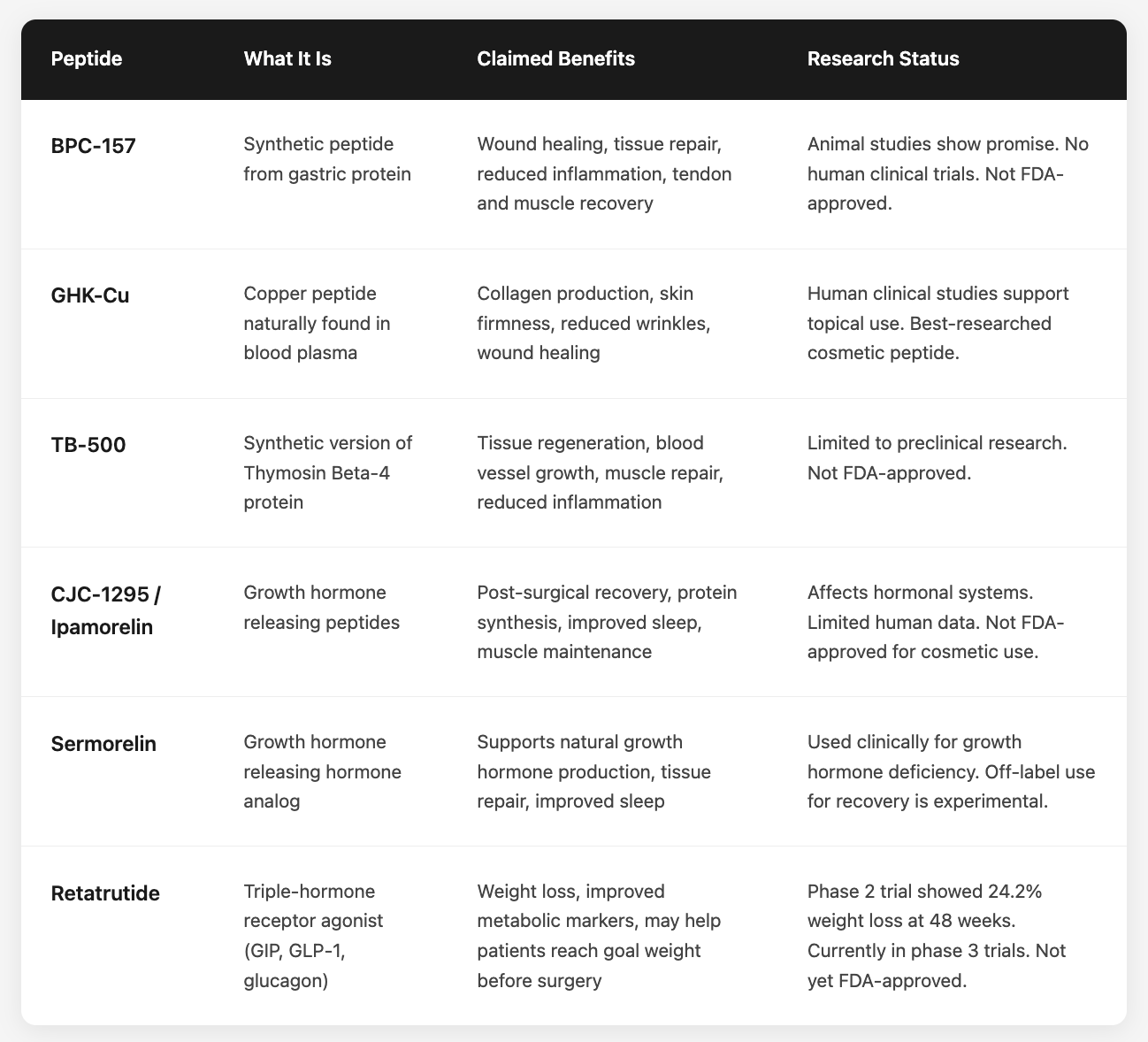
BPC-157 is a synthetic peptide derived from a protein found in human gastric juice. It has gained significant attention for its potential healing properties.
What it is claimed to do:
What the research shows: A study published in the Journal of Physiology and Pharmacology (Sikiric et al., 1997) found that BPC-157 promoted healing in rat models by enhancing granulation tissue formation, angiogenesis, and collagen production. More recent research published in Frontiers in Pharmacology (2021) demonstrated accelerated wound healing in animal models through increased blood flow and collagen repair.
A study by Chang et al. published in Molecules (2018) found that BPC-157 increased growth hormone receptor expression in tendon fibroblasts, suggesting a potential mechanism for its tissue repair effects.
Important limitation: Nearly all studies on BPC-157 are animal-based. High-quality human clinical trials are still lacking, and this peptide is not FDA-approved for any medical use.
GHK-Cu is perhaps the most established peptide in cosmetic skincare. It occurs naturally in human plasma, though levels decline significantly with age. According to research published in the International Journal of Molecular Sciences (Pickart et al., 2015), plasma levels drop from about 200 ng/ml at age 20 to approximately 80 ng/ml by age 60.
What it is claimed to do:
What the research shows: Unlike most peptides discussed here, GHK-Cu has human clinical data. A study by Abdulghani et al. (1998) published in Disease Management and Clinical Outcomes found that GHK-Cu cream applied to thigh skin for 12 weeks improved collagen production in 70% of women treated, compared to 50% with vitamin C cream and 40% with retinoic acid.
A 12-week facial study on 71 women by Finkley et al. (2005) found that GHK-Cu cream improved skin laxity, reduced wrinkles, increased skin density and thickness, and strongly stimulated dermal keratinocyte proliferation. The treatment was also found to be non-toxic and non-irritating.
Research published in Oxidative Medicine and Cellular Longevity (Pickart et al., 2012) confirmed GHK-Cu's role in stimulating collagen synthesis, attracting immune cells to injury sites, and supporting wound healing across multiple tissue types.
TB-500 is a synthetic version of a naturally occurring protein involved in tissue regeneration and cell migration.
What it is claimed to do:
What the research shows: Preclinical studies suggest benefits for wound healing and tissue repair, but human data remains limited. A review published in Cureus (2024) noted that while TB-500 shows promise for soft tissue regeneration, additional research is necessary before clinical translation can occur. TB-500 is not FDA-approved for any medical use.
These peptides stimulate your body's natural production of growth hormone, which plays a role in tissue repair, muscle recovery, and overall healing.
What they are claimed to do:
What the research shows: Growth hormone's role in healing is well-established, but using peptides to stimulate it for surgical recovery is still an emerging area. These peptides affect hormonal systems and are not FDA-approved for cosmetic or surgical recovery purposes.
For many plastic surgery procedures, particularly body contouring, tummy tucks, and liposuction, being at or near your goal weight leads to better outcomes. Excess weight can increase surgical risks and affect results.
Retatrutide is an investigational triple-hormone receptor agonist developed by Eli Lilly that targets three receptors: GIP (glucose-dependent insulinotropic polypeptide), GLP-1 (glucagon-like peptide-1), and glucagon. It represents the next evolution beyond current medications like semaglutide (Ozempic, Wegovy) and tirzepatide (Mounjaro, Zepbound).
What the research shows: A phase 2 randomized, double-blind, placebo-controlled trial published in the New England Journal of Medicine (Jastreboff et al., 2023) enrolled 338 adults with obesity. The results were significant:
The study also showed improvements in cardiometabolic markers including blood pressure, triglycerides, LDL cholesterol, and fasting glucose.
Current status: Retatrutide is not yet FDA-approved. It is currently in phase 3 clinical trials (the TRIUMPH program) evaluating its safety and efficacy for chronic weight management.
Why this matters for plastic surgery: Patients considering body contouring procedures may benefit from medically supervised weight loss to reach their goal weight before surgery. Achieving a stable, healthy weight before procedures like abdominoplasty or liposuction can improve surgical outcomes, reduce complications, and lead to more predictable results. We recommend maintaining a stable weight for at least three to six months before undergoing body contouring surgery.
Here is where we need to be honest with you: the science on many peptides is promising but incomplete.
Important: Many injectable peptides are classified as research compounds and are not approved for human use outside of clinical trials.
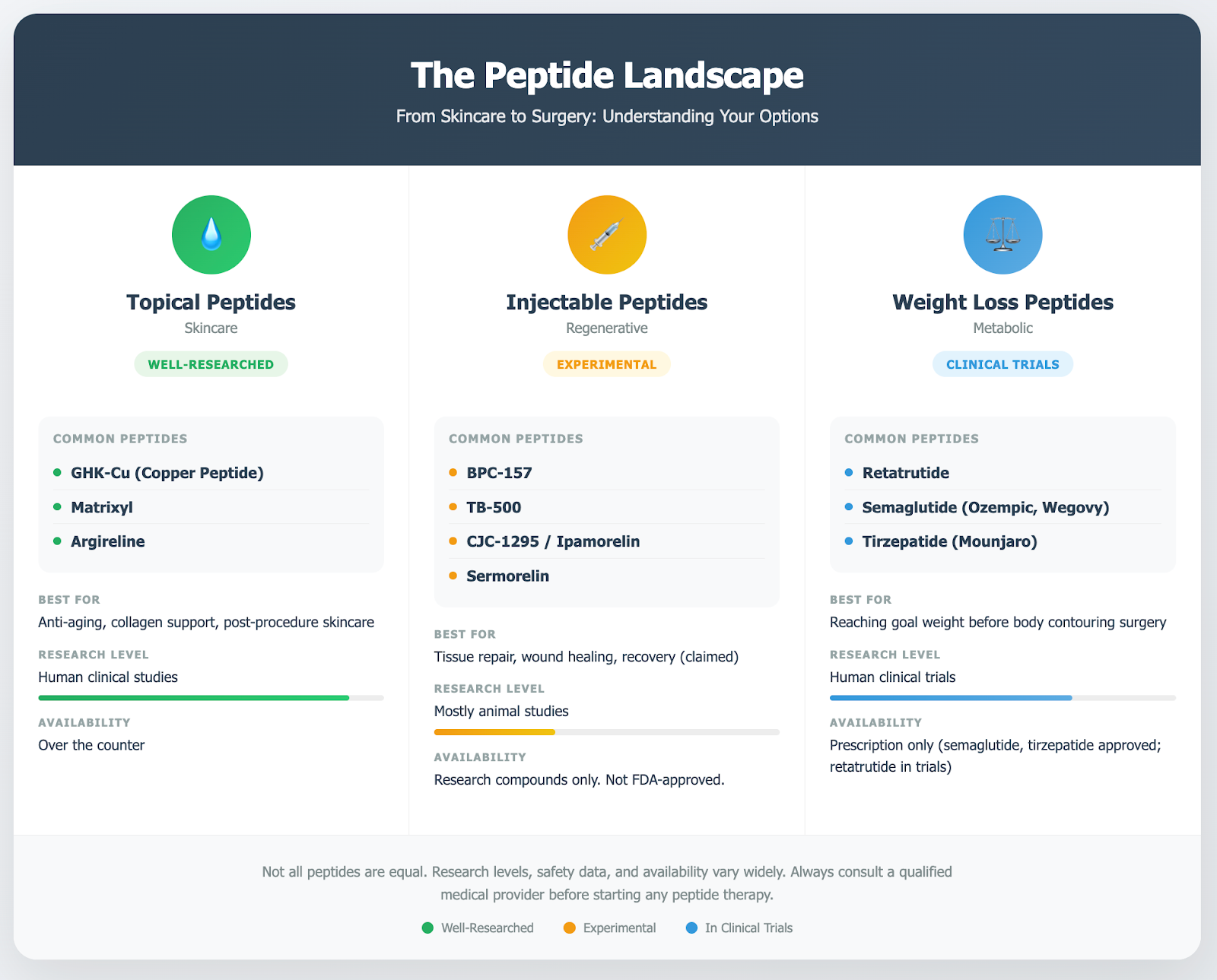
It is important to distinguish between these two categories. They have very different evidence bases and risk profiles.
Topical peptides are well-established and generally considered safe. You will find them in serums, creams, and eye treatments designed to:
Common peptide ingredients:
These are a safe, evidence-based addition to your skincare routine before and after cosmetic procedures.
Injectable peptides are more experimental. While they may offer benefits, they come with more significant considerations:
Peptides are an exciting area of research, and we are optimistic about their potential role in plastic surgery recovery. But we also believe in being honest with our patients.
Topical peptides (especially GHK-Cu): Well-supported by human clinical studies for skincare. Safe to incorporate into your routine.
Injectable peptides (BPC-157, TB-500, etc.): Promising in preclinical research but still experimental. Not FDA-approved. Approach with caution and only under qualified medical supervision.
Weight loss medications (retatrutide, semaglutide, tirzepatide): May help patients reach their goal weight before body contouring procedures. Should be used under medical supervision.
Evidence-based recovery fundamentals: Still the foundation of good surgical outcomes. No peptide replaces proper nutrition, rest, and following your surgeon's instructions.
If you have questions about optimizing your recovery before or after plastic surgery, or about reaching your goal weight before a procedure, we are here to help. Schedule a consultation to discuss what is right for you.
You might be wondering why we keep mentioning FDA approval. Is it really that big of a deal?
To be fair, many common supplements like protein powders, collagen, creatine, melatonin, vitamin D, and turmeric are also not FDA-approved. The FDA does not review or approve dietary supplements before they hit the shelves. Manufacturers are responsible for their own safety and labeling.
So what is the difference?
Those supplements are legally sold as dietary supplements under a category the FDA recognizes. Peptides like BPC-157 and TB-500 are different. They are classified as research compounds, meaning they are not approved for human use in any form. They exist in a regulatory gray area, often sold with labels that say "for research purposes only."
This matters for a few reasons:
This does not mean these peptides are useless or dangerous. It means the research is still catching up. If you are considering injectable peptides, approach with caution and only under qualified medical supervision.
References:
Disclaimer: This article is for educational purposes only and does not constitute medical advice. The peptides discussed (BPC-157, TB-500, and others) are not FDA-approved for cosmetic, surgical, or any medical use. Retatrutide is investigational and not yet FDA-approved. We do not currently offer injectable peptide therapies at our clinic. Always consult with a qualified healthcare provider before starting any new treatment.


